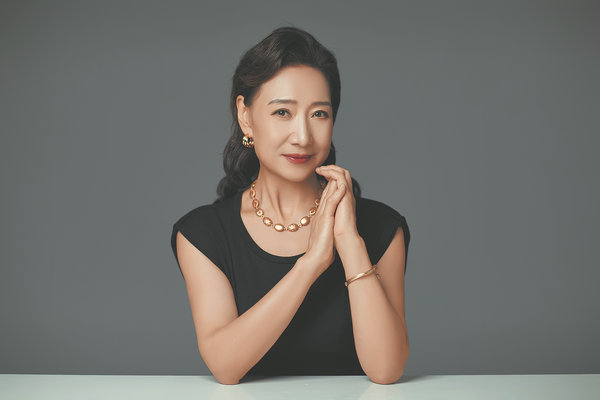
Jiang Jianhua
Overview
Jiang Jianhua is a highly acclaimed erhu virtuoso celebrated for her mastery of the traditional Chinese two-stringed bowed instrument known for its expressive and emotional sound. Born and raised in Shanghai, China, Jiang's musical journey began at the age of 10 under the tutelage of her uncle, Tang Chungui, an erhu teacher. Over the years, Jiang has made remarkable contributions to the world of music, transcending cultural boundaries and introducing the erhu to international audiences.
Early Life and Education
Jiang Jianhua's passion for music was cultivated in a family that cherished the art form. Her early exposure to the erhu, which she initially regarded as a toy, laid the foundation for her illustrious career. In 1974, she moved to Beijing to attend the middle school affiliated with the Central Conservatory of Music, where she further honed her skills. In 1978, she was admitted to the Central Conservatory of Music.
A turning point in her career came later that year when she performed The Moon Reflected in the Second Spring by Hua Yanjun, also known as A Bing, for Japanese conductor Seiji Ozawa. Ozawa was deeply moved by her performance and invited her to study in Japan, paving the way for Jiang to introduce the erhu to audiences in Japan and beyond.
International Career
Jiang Jianhua's international career began in earnest when she performed as a soloist at the Tanglewood Music Festival in Massachusetts, USA, under the invitation of Seiji Ozawa. Her performance with renowned symphony orchestras from Boston and San Francisco marked the beginning of her journey in bringing the erhu to a global stage.
In 1986, Jiang became the first Chinese musician to perform at the Suntory Hall in Japan, playing with the New Japan Philharmonic under Ozawa's baton. The same year, she contributed to the soundtrack of the film The Last Emperor, composed by Ryuichi Sakamoto. The success of the film significantly heightened interest in the erhu in Japan.
Contributions and Achievements
Jiang Jianhua has been instrumental in the evolution of the erhu, collaborating with various composers to create contemporary pieces for the instrument. One of the most notable works is The Shadow of Wind, an erhu concerto composed for her by Kei Anjo, which she performed with the Berlin Philharmonic in 1989.
Her album Hometown Passion won the special prize at the 17th Gold Disc Award in Japan in 2003. The album features a blend of traditional erhu repertoire and her adaptations of classical pieces, showcasing the versatility of the erhu and its ability to convey a wide range of emotions.
Teaching and Legacy
In 1993, Jiang began teaching at the University of Creation Art, Music and Social Work in Takasaki city, Japan, where she helped establish one of the first erhu majors in the country. Her commitment to education continued when she returned to China in 2007 to teach at the Central Conservatory of Music in Beijing. Today, she is dedicated to nurturing young musicians and exploring new possibilities for the traditional instrument.
Jiang Jianhua's career is characterized by a deep reverence for the erhu's cultural heritage and a commitment to promoting Chinese musical traditions on a global scale. Through her performances and teaching, she has inspired a new generation of musicians and contributed significantly to the international appreciation of the erhu.
Recent Work and Collaborations
Jiang Jianhua remains active in the music scene, performing and collaborating with musicians from various genres. Her concert at the National Centre for the Performing Arts in 2024 in Beijing featured a blend of traditional and contemporary pieces, including adaptations of works by Ryuichi Sakamoto and French composer Bizet. Her collaboration with pipa player Yang Baoyuan, cellist Mo Mo, and jazz pianist Huang Jianyi exemplifies her dedication to exploring new dimensions of the erhu.
Jiang continues to enchant audiences with her ability to evoke a spectrum of feelings through her instrument's resonant timbre, bridging cultural gaps and connecting people through the universal language of music. Article reference1. Traditional with a twist. chinadaily.com.cn. 20242. Hometown instrumental in musician's compositions. chinadaily.com.cn. 2023Photo Gallery(6 pictures)CategoriesArtsTagChinese MusicArtistsRelatedErhu MusicCatalogue1. Overview2. Early Life and Education3. International Career4. Contributions and Achievements5. Teaching and Legacy6. Recent Work and Collaborations- - - []








